The Industry
A Crop That Built a Coastline
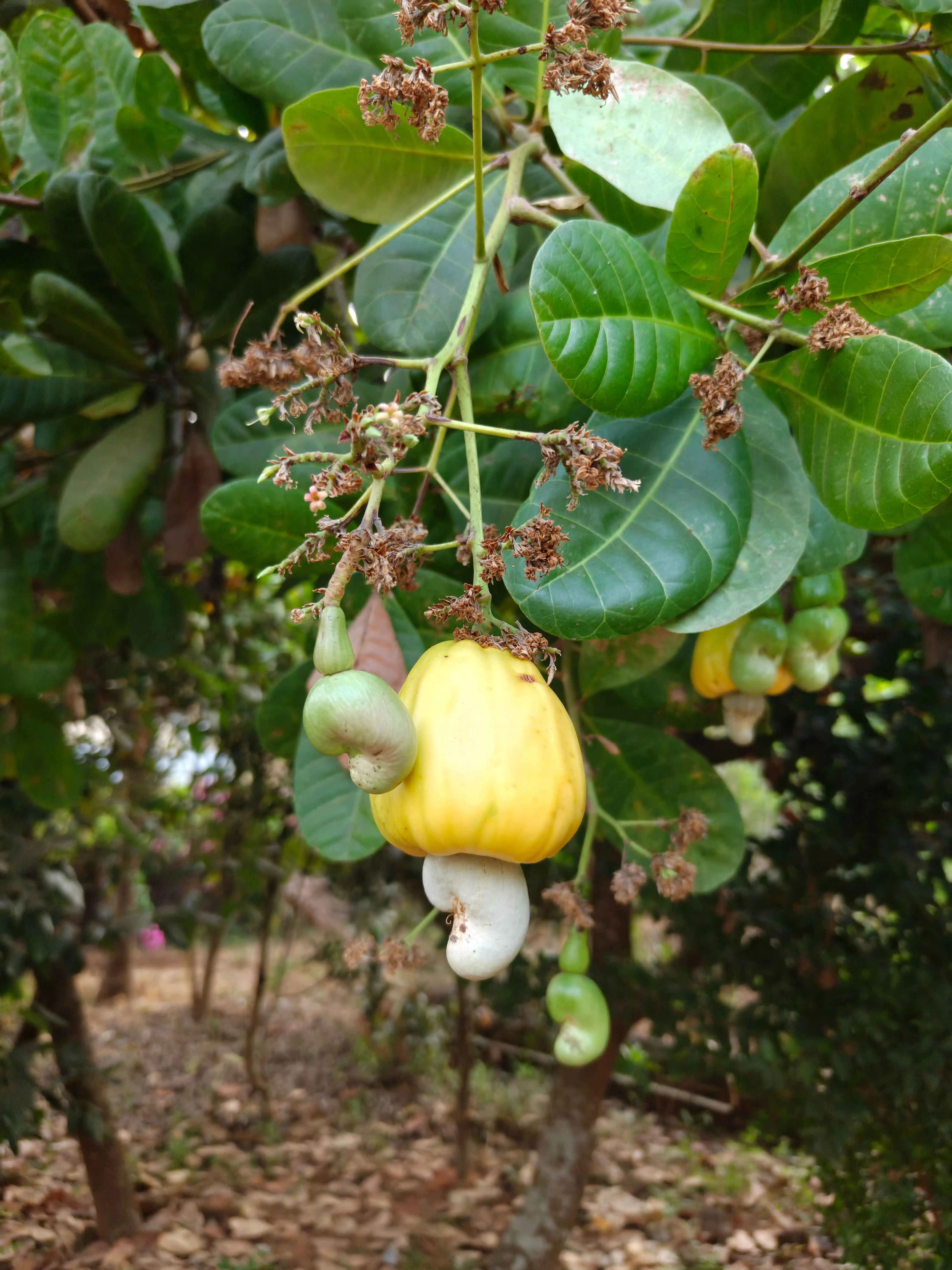
The cashew nut is not native to India. Brought by the Portuguese to the Konkan coast in the sixteenth century, it took root so thoroughly in South Kanara (present-day coastal Karnataka) that it became inseparable from the landscape and economy of coastal Karnataka.
For the first century of its presence in Mangaluru, the cashew was traded raw — kernels with their husks, shipped to European ports. There was no organised processing industry. That changed in the early decades of the twentieth century. And when it changed, it changed everything.
Origins
By the 1920s, the first organised processing operations had appeared in Mangaluru. The VITAPACK packing system, introduced around 1925, enabled cashew kernels to be packed in tin containers with carbon dioxide gas — giving them the shelf life that American and European markets required.
The next leap came in the mid-1930s, when two Mangaluru firms independently developed machines for roasting cashew nuts in an oil bath of cashew shell liquid. The oil bath method provided uniform roasting and enabled the extraction of cashew nut shell liquid as a valuable byproduct. In time, processing evolved towards cleaner and more controlled steam-based methods.
When Shri Sujir Damodar Nayak began processing in 1941, he adopted the oil bath method. His chemistry training gave him an understanding of CNSL's industrial potential that most processors lacked. The byproduct became, in time, as important as the kernel itself.
The Process
Raw cashew nuts arrived from East Africa and coastal Karnataka. At Swasti's peak, the factory compound at Konchady held hundreds of tons before each season's processing began.
In traditional processing, raw cashew nuts passed through oil bath roasters, where heat cracked the shell and released cashew nut shell liquid (CNSL), a valuable industrial byproduct. Over time, the industry has evolved towards cleaner, steam-based methods while continuing to value CNSL extraction.
Workers cracked open each roasted shell by hand to free the kernel, then peeled away the thin inner skin. Speed and accuracy determined the grade of the finished kernel.
Kernels were graded by size and quality and packed in 25 lb tin containers, two tins to a dealwood case, and transported to the Bunder docks for loading onto vessels bound for New York, London and other international markets of the time.
Quality Control
After processing, cashew kernels are graded according to internationally accepted standards such as W180, W240, and W320, based on size, colour, and overall quality. New York buyers paid a premium for certain Swasti grades — quality was not a claim. It was a fact of record.
Beyond the Kernel
The cashew nut yields more than its kernel. During processing, the shell releases Cashew Nut Shell Liquid (CNSL) — a naturally occurring phenolic compound with significant industrial applications, including resins, coatings, friction materials, and its primary derivative, Cardanol.
Swasti Cashew Industries has worked with CNSL since the 1940s — among the first processors in Mangaluru to recognise and develop its industrial value. That expertise runs unbroken to the present day.
Read about CNSL and Cardanol →